

Searching for Z
A years-long quest for Günther Zuntz's Griechischer Lehrgang comes to an end...

For years I have been searching for a few particular works to add to my library, specifically works having to do with ancient Greek.
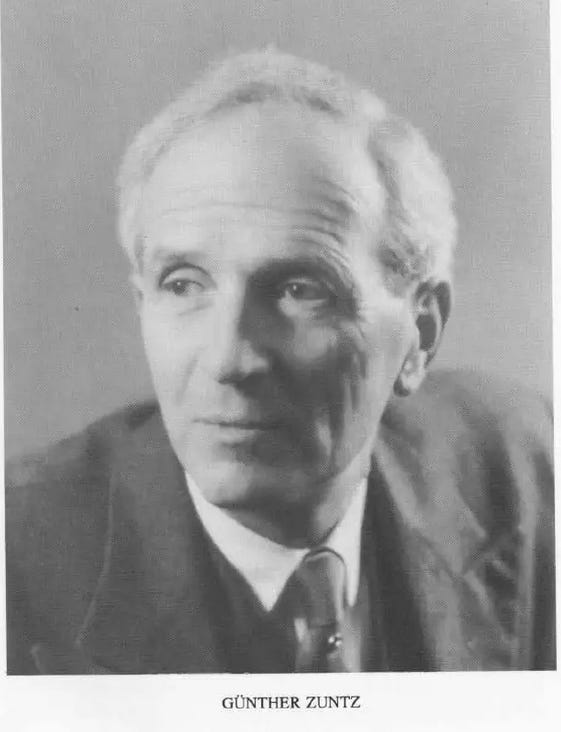
One of these works is a set of volumes that comprise “a course in classical and post-classical Greek grammar from original texts” by a man named Günther Zuntz. Now, I had access to this course in both German and English, through my local seminary library for the English edition and through a creative commons open license for the first German edition. But one such as I seeks to acquire such things for one’s self.
There’s a reason why I have sought these books. I think they represent an unmatched program in learning ancient Greek (Classical and Hellenistic). I also think that Zuntz is criminally unknown in the world of ancient Greek pedagogy. I won’t afflict you with too much pedantry about pedagogy in this field, but I will say that I think that the way ancient Greek is often taught and spoken about in many quarters is not great.
I think that the total abstraction of grammar and paradigms in current forms of the “grammar-translation” method is a burden to even the best students and fails at its chief aim, which is to teach grammar. It also fails at what it doesn’t often try to do—teaching an ability to actually read the texts!
I think that the “living language” approach now in vogue (as a response to the failures of grammar-translation) is often little more than a bill of linguistic goods. Save for the select few (who have learned traditionally first and could/would learn with any method) the language is butchered by the untutored speech of people who aren’t even fluent in their so-called mother tongues! What you get in the end is a lot of English, French, German, or the like being spoken with ancient Greek words. I think also that the better time spent towards strict composition practice (I’ve done it) falls on the same sword, even if a little more elegantly.
What about reading-heavy, comprehensible-input approaches, such the Cambridge’s Reading Greek and Oxford’s Athenaze? There are others. I’ve read most of many of these, and in ways they are wonderful. In some ways, they’re the best of a bad lot. Still, in many places, even they are simply not ancient Greek.
Earnest students can learn with all of the above and clearly do. But I find it astounding that, while most or all agree on what is needed, so few are able to deliver in terms of pedagogy.
What would really be needed would be a lot of direct engagement with real ancient Greek. It would have to start easy, and progress, so that even the beginner can get lots of Greek in from the beginning. There would need to be a lot of explicit grammar, but it should never be abstracted away from constant engagement with examples in real Greek.
The catch would be that you couldn’t get a single narrative progressing from easy to hard. Not one that is real ancient Greek.
So the real challenge would be actually finding interesting, meaningful, and plentiful examples of real ancient Greek that can illustrate grammar and still be enjoyable to read. Perhaps the best lines, sayings, verses, and short narratives, could be selected from the sea of ancient texts, selected for the way they illustrate a particular point of grammar, organized at increasing levels of difficulty, grouped around themes and subjects. It would be amazing, right? And then you could use those real texts as a basis for reading aloud, memorizing, dialogues, and basic classic exercises of declining, conjugating, translating, re-translating, etc.
Good idea. But it would take a master to do it. And not just a master, but one with time and energy. It would also be big project. Well, Zuntz was that master. He admirably took the requisite time (on the order of years, decades in a sense) at the height of his career.
His 1,000 page (in English) Greek course is the realization of a “what if” that was actually done. And while no course is perfect, his bold achievement simply stands apart in its class.
~
You can see that I wanted to acquire the books. I even had a dream of building a curriculum from them for contemporary students.
I spent years searching.
I was turned down by every university I emailed requesting that they de-list them and sell them to me (even their second copies!). I was once told that I should offer $1000 USD to a potential seller who had only one volume of the English, since he didn’t want to part with it. I won’t say I didn’t think about it.
It’s a little too much, I decided.
So I would check Book Finder every week, in hopes that the volumes would emerge. I asked friends who popped into used academic bookstores to look for me; contacted sellers of classics/humanities books.
I even contacted the original publisher of the English edition, then the publisher that acquired that publisher.
Nada.
Still, there were more locks to rattle.
I was, for a time, obsessed with finding these volumes and anything else related that I could.
I had also known of tapes that the author recorded to be used with his lessons, and so began a search for them as well.
Things took a turn now.
I contacted the University of Texas at Austin, where Zuntz taught early versions of his course. Their kind archivist spent some time digging, but came up empty handed.
I contacted the University of Tübingen in Germany, where he published the German edition of his course, but I didn’t hear back.
And then I contacted Manchester University in the UK, where Zuntz was based for a number of years.
And . . . signs of life!
An old professor in the classics department knew someone who knew Zuntz’s daughter. Zuntz died in the 90s, in his 90s, so his children are now old themselves. In the course of time I was put in touch with his son.
We began a correspondence, and I told him who I was and what I was working on and what I was seeking. I cannot share all of those details here, because I will share them later when I can. But here, after seasons of drought, was an oasis.
He told me of tapes, folios, drafts, and copies. He would freely send me a copy of the English and second German editions for my own acquisition and use.
I couldn’t believe the good fortune. And when I once thought the works to be out of reach, they came express from the home of the family of the very man whose work I had sought for so long.
Now, I always love getting books in the mail from individual sellers, but I must say that I’ve never quite had the feeling I did when I saw this.
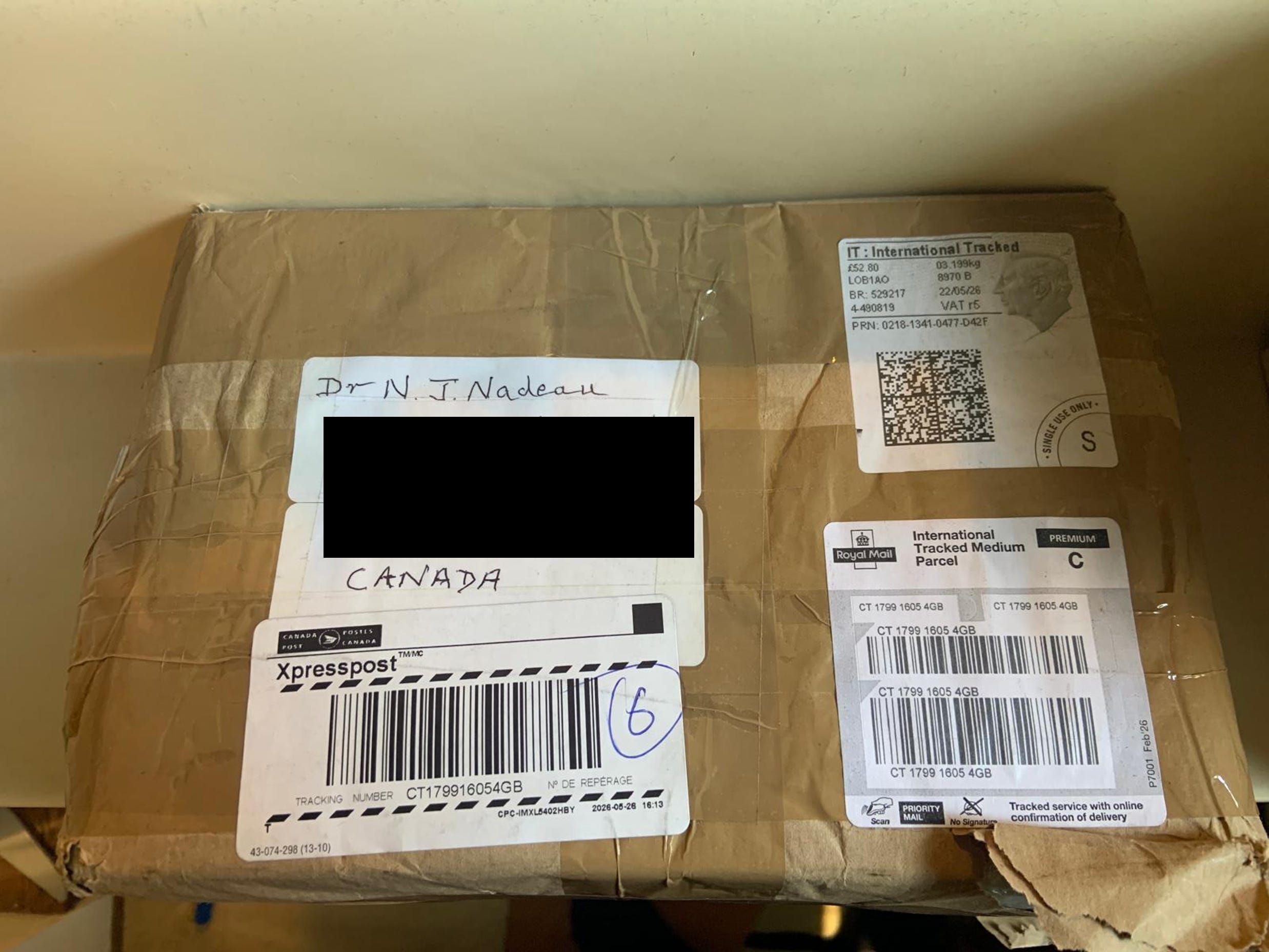
And then,
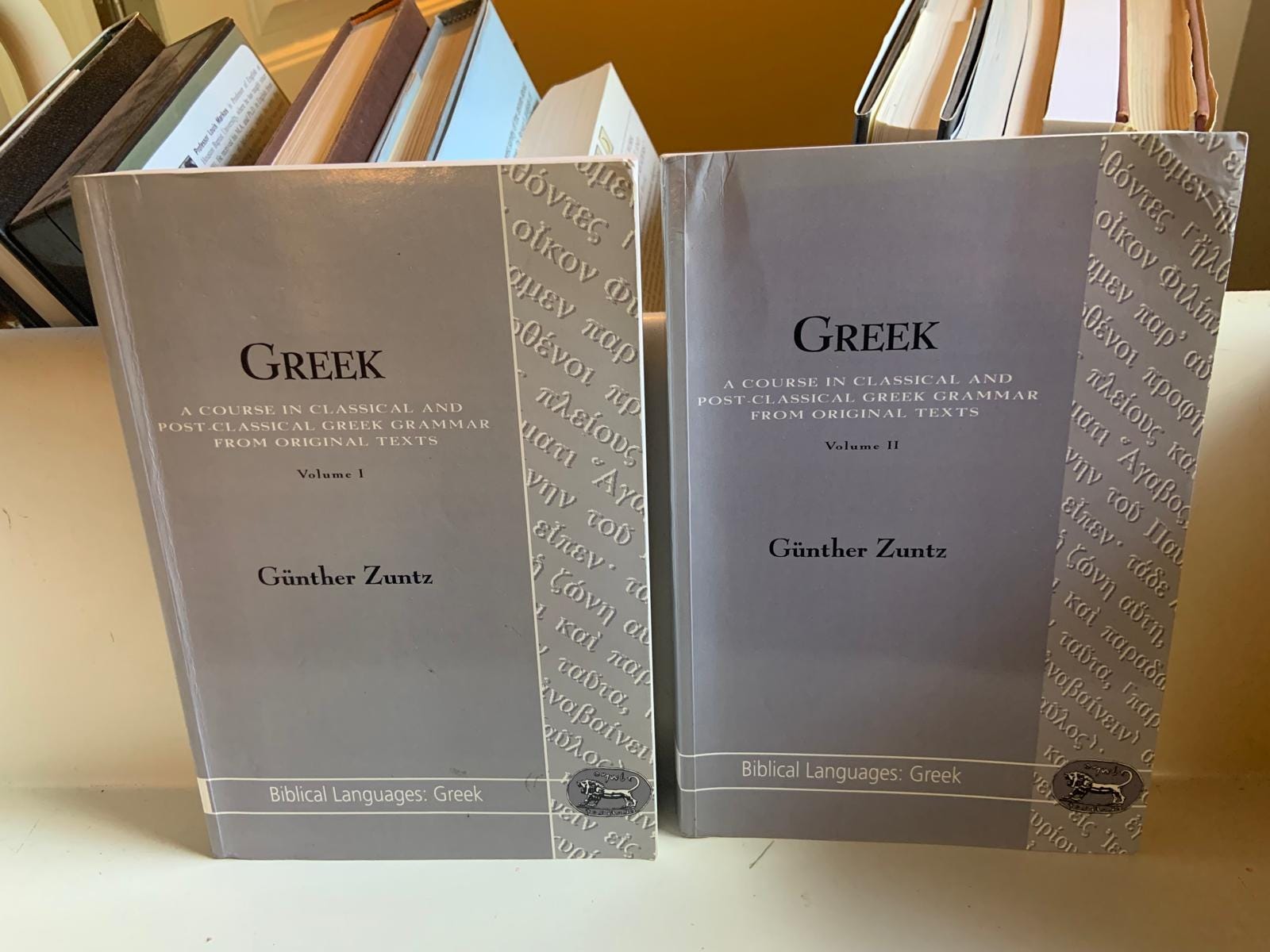
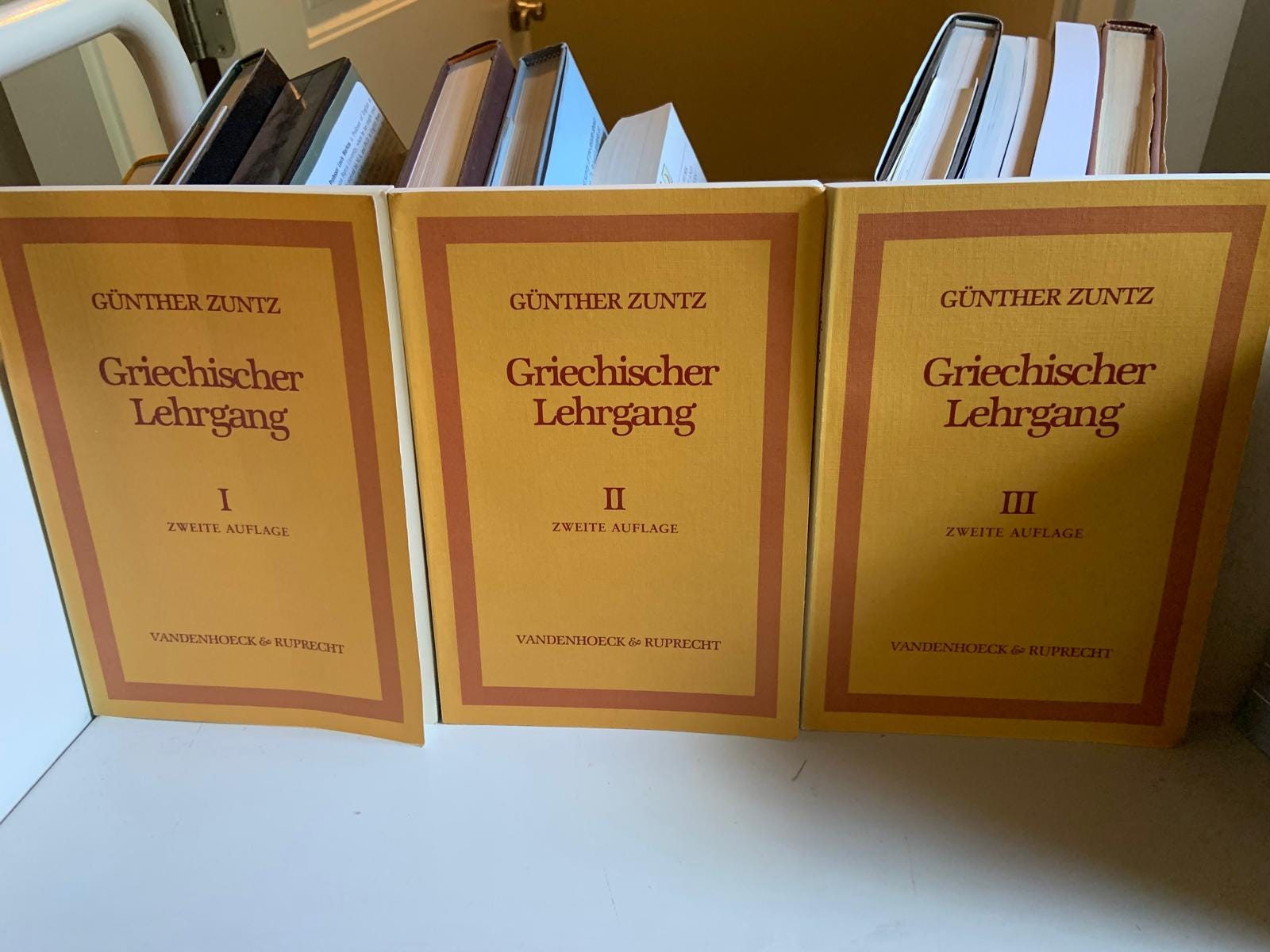
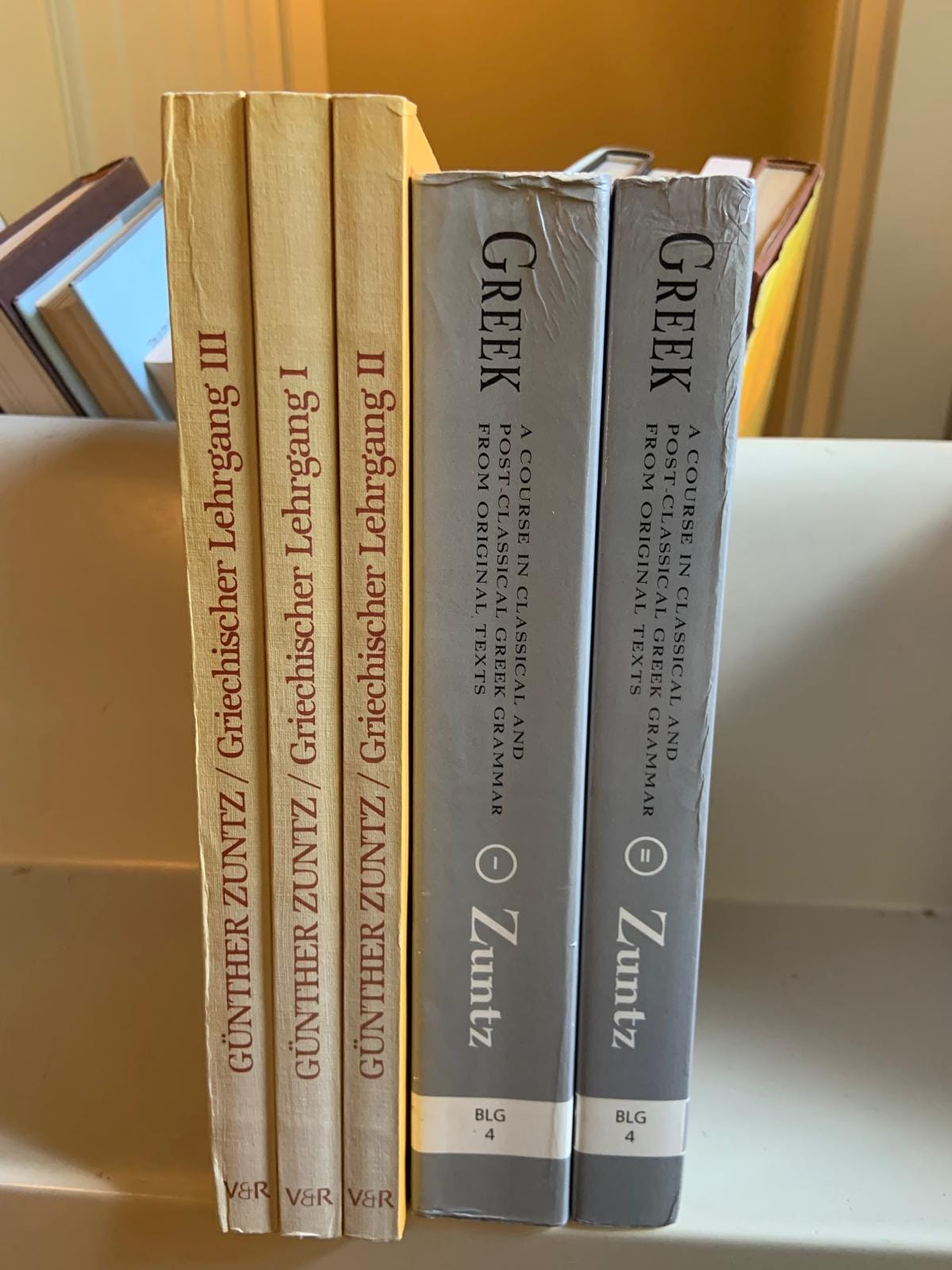
And here they are.
The saga has come to one end.
Or has it?
There’s more to tell about what’s really going on with my acquiring these books.
But that is for another time!
What a journey!!!!
To more literature treasure hunts and the Merry, brother 🙌🏼